Intellectual property
Industrial design patenting in the EU allows you to protect the unique appearance of your product across all EU countries. Secure exclusive rights to your design, prevent unauthorized copying, and enhance your brand value in the European market.
- Filling application
- Payment
- Patent granting
Live pricing calculator
See your total before you start the application
Selected quantity: 1
Increase the quantity to preview the updated filing total instantly.
- First application
- 750,00 €
- Each additional item
- 225,00 €
- Total for 1 items
- 750,00 €
Industrial Design Registration
Secure the visible shape, styling, and product details that make your design distinctive in the market.
Reinforce the uniqueness of your product presentation and help separate it from competing lookalikes.
Create a stronger position for asserting rights in the design during licensing, launch, and market disputes.
An industrial design may be
Explore the kinds of product visuals, technical ideas, and creative works Profitmark can help you protect through one guided online flow.




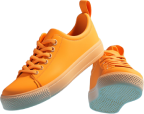
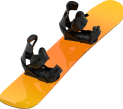


Design registration in EU
A registered EU design can protect the appearance of a product across the European Union. Think about what someone can see: the shape of a chair, the arrangement of parts on a lamp or a surface pattern on packaging. A design application is different from applying for a trade mark for the product name or a patent for the way a mechanism works.
Identify the design you want to protect
Choose the version that matters commercially. If a handle, casing or pattern is the feature customers notice, make sure it is visible in the material you prepare. A photograph showing several unrelated products may make it difficult to understand which appearance the application concerns.
For example, a lamp manufacturer may sell the same base with two different shades. Decide whether the important feature is the base alone, a particular assembled lamp or more than one version. Do not assume one image necessarily covers every combination in the catalogue.
Check earlier designs and disclosure dates
EU design protection requires novelty and individual character. Look at earlier designs for similar products and keep images and dates of the closest examples. The search helps identify questions about the overall impression; it is not a guarantee that a registration can withstand a later challenge.
List trade fairs, catalogue releases, crowdfunding pages and sales where your design may already have appeared. Dates, who disclosed the design and in what circumstances can affect the analysis. If the product is still confidential, consider filing before showing it publicly. Do not assume a grace period available in one territory will apply elsewhere.
Preparing consistent images of the product design
- Use images showing the same design from useful angles.
- Keep backgrounds simple and avoid props that obscure product features.
- Check ownership if an employee, agency or freelance designer created the work.
Review the images together at the size an examiner or competitor might see. If an edge appears rounded in one view and square in another, resolve that inconsistency before applying. Record which files represent the filed version and which are merely drawings used during development.
Filing with EUIPO
Identify the applicant and the product and submit the representations required for the application. EUIPO examines the filing requirements. Registration is not a substantive clearance of novelty and individual character. If a competing design is discovered later, the images, disclosure history and filing dates may become important evidence.
Keeping copies of the product images filed with EUIPO
Save a sheet showing each filed view beside the corresponding product version. If you use photographs, record which details belong to the product and which are merely reflections, scenery or packaging. A later comparison with a competing product will be easier if the registered views are immediately available instead of scattered across a design team’s working files.
If several people contributed designs or a contractor supplied the images, keep the design agreement and any transfer documents. Identify any earlier public showing separately from the filing date. These records answer different questions: who was entitled to apply, what appearance was filed and what had already been disclosed.
Cost, term and changes to the product
Check the quote for the number of designs and the services required. A registered EU design is initially protected for five years from filing and can be renewed in five-year periods up to a total of 25 years. Keep renewal dates alongside the product versions. A materially redesigned product may need its own filing rather than relying on an earlier registration.